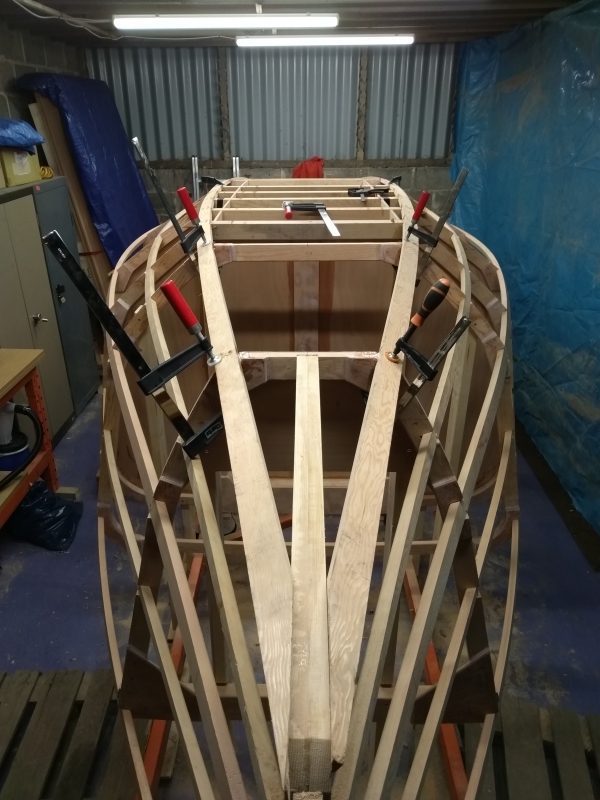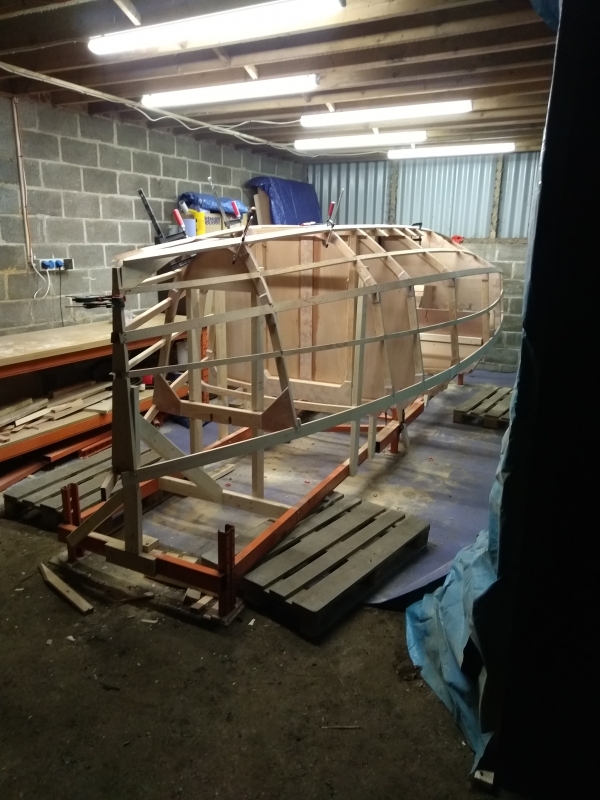

I’ll not pretend that fitting the stringers has been a particularly fun job. The sheer clamp and mid-panel ones went in fine, the chine one however… the cow shed probably hasn’t seen that kind of language since the late Miss Daisy ate the farmer’s new iphone back in 2010 and it had to be surgically removed from one of her stomachs by the local vet.
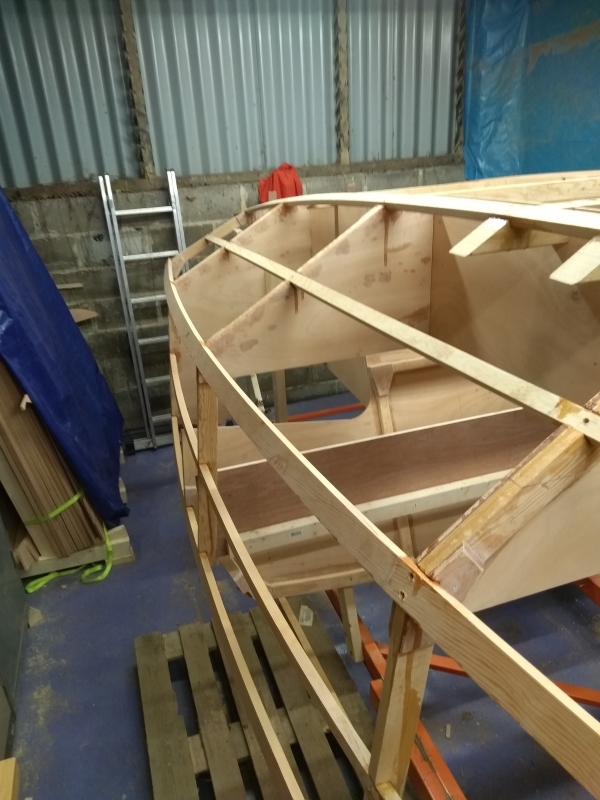
The edge set (bending the way the stringer doesn’t want to bend – i.e. in a bow along the 50mm dimension) meant that the forces involved were pretty high. Lots of clamps, and lots of marking, cutting and recutting, and remarking and recutting of the notches in the oak floors eventually got a good fit, but at the expense of one clamp that literally fell apart in my hands and some new grey hairs. Not 100% sure that adding the oak floors at this point was really the best route to take. It just adds more notches that have to line up at this stage. Still, its done now, and looks and feels very solid. The stem joins aren’t quite finished yet, one stringer is slightly too high in the photos and the chine stringer to knee joint still needs finishing and attaching permanantly.
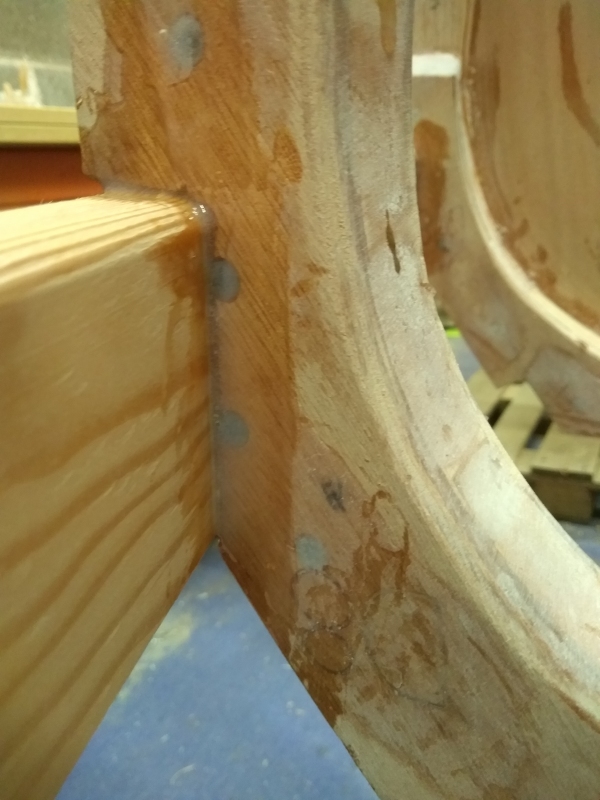
A learning point for me was that the notching for the forward frames needs to be so deep that the placement of the screws when building the frames should have taken this into account. I got very close to the screws in their pockets on the forward two frames. Ideally i should have moved the screw locations in by 10mm and had them off the centre line of the frame timber, or simply not kept the screws in when making the frames, and backed them out once the epoxy had set – leaving no hardware in the joint.
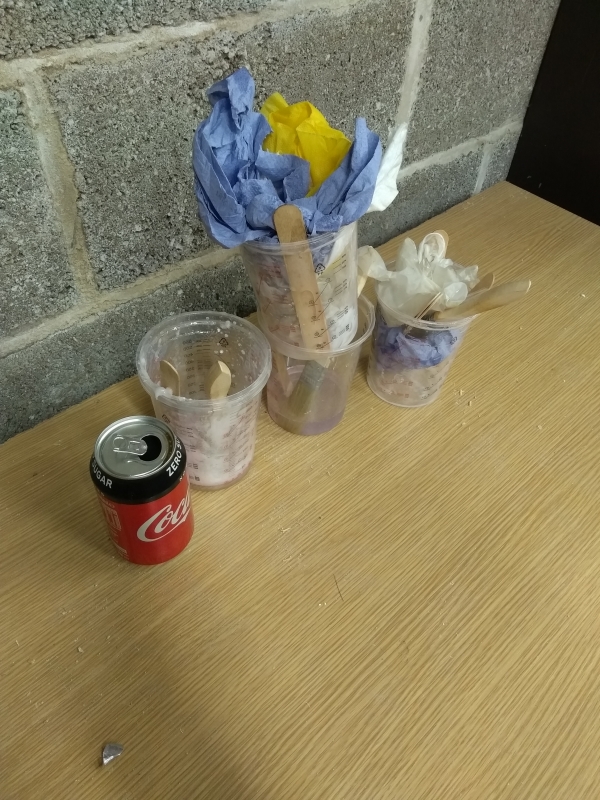
In other news, I previously mentioned that the ‘microfibres’ that Fyne provided were similar to 406 filler from West System. This is not the case, the microfibres are milled cotton I think, and 406 is collodal silica so have not got the same mechanical properties. All the joints I’ve made with both have been successful apart from the scarf, which i attribute to the resin gettting slightly crystalline in the pumps. I’m moving to 406 for all adhesive tasks in the future, with the microfibres being used with wood flour for fillets.
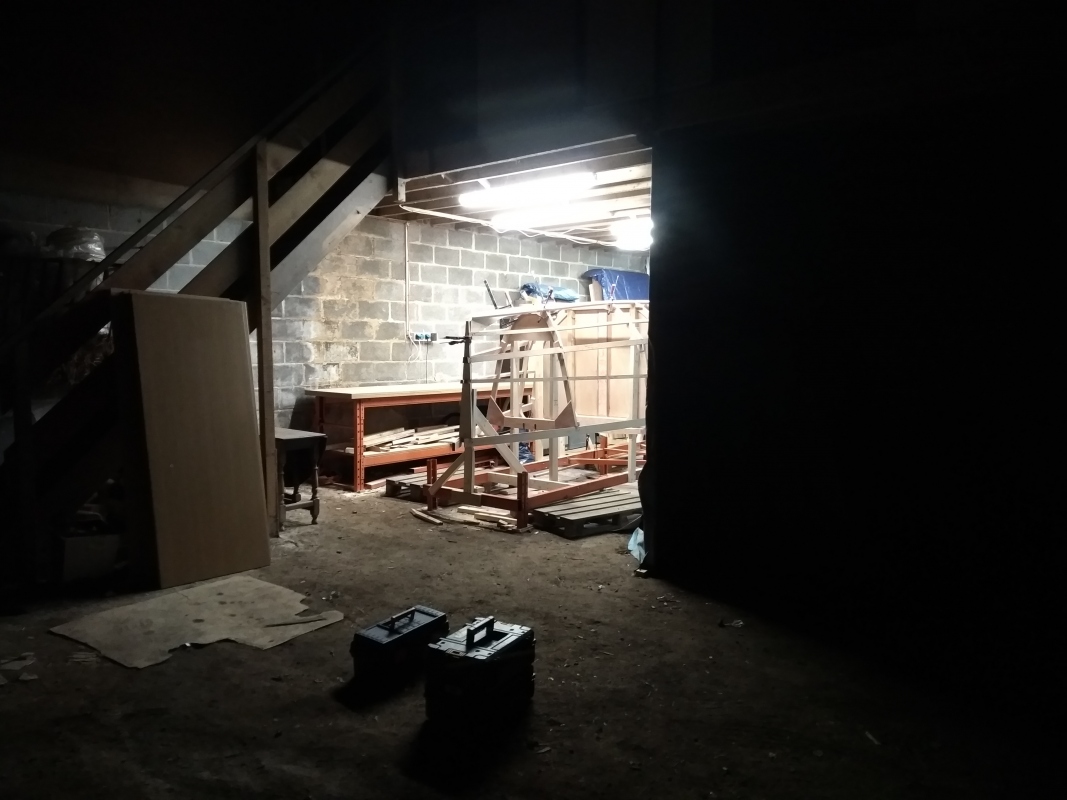
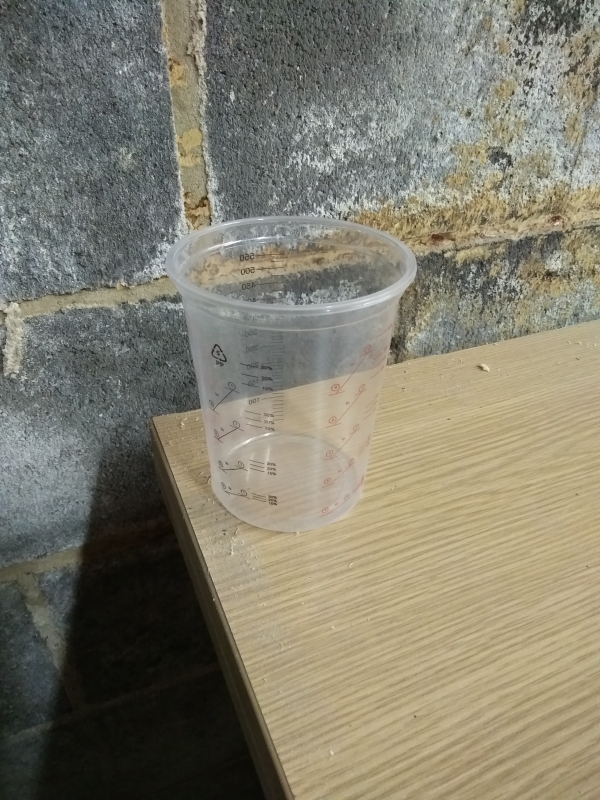
One disadvantage of working the shed of an evening is the lack of, ah, facilities. Using the materials I had to hand at the time, I now know the exact capacity of my bladder.
Next job is bevelling of the stringers and frames to take the hull planking. To allow for my own incompetence I’ve already ordered some spare blades for the electric planer, as it will only be a case of when, not if, I hit any screws that are not buried deep enough in the stringers…