

Books. I love books.
As I travel a lot with work I end up reading a lot. Airports, railway stations, even queues for hire cars all benefit from a quick Kindle outing. Reading books on sailing helps keep my mind off work when I least want it (on the plane on a Friday evening for example).
I’ve collected a bunch of reviews of boat-themed books (novels and non-fiction) that I’ve read in and thrown them on the page below.
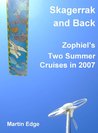 Skagerrak and Back: Zophiel’s Two Summer Cruises in 2007 by Martin Edge
My rating: 4 of 5 stars
There are reviews of Edge’s other book on here – I like them all as you may have gathered.
I think I’m right in saying that this is his first one however, and as such it doesn’t have teh confidence of the others in the sailing series. There is also an odd editorial option to have the subheading ‘Pondering…’ in front of sections of random observation that break the flow of the writing somewhat. You begin to get used to them eventually however.
If you like sailing and want to read a real, hero-less account of actual sailing this is for you. There is no ocean race heroism, no Motessier poncing, this is just writing about sailing and travelling and its damn good.
 The Accidental Sailor by Rod Heikell
My rating: 4 of 5 stars
Like most of Heikell’s numerous pilots this is well written and laden with fact and historical information.
Heikell tells his tales of taking very small sailing vessels across Europe’s greatest waterways with aplomb. Nautical info, descriptions of the challenges of small boats, dealing with mafiosi in eastern Europe before the rise of the Iron Curtain and the simple logistic challenges to doing such journeys are all captured in this fun book.
It’s travel writing with a nautical slant. It does read a little like a jazzed up diary at times, but then that is pretty much what it is. Impressive sailing and also story telling – a break from the concise fact telling in his pilots, and reads much more like the sections within the med pilots on local history and mythology.
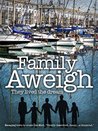 Family Aweigh by Michael Holt
My rating: 4 of 5 stars
I’ll be honest – I bought this thinking that it was about sailing. its actually about a family who buy a motor cruiser for a year long sojourn in the Med.
The story ranges from fixing engines to how the kids integrate with other locals and also other family cruisers – a full on description of a year spent away from the UK and on a boat. The lack of sailing didn’t bother me – the nautical sections are still interesting, the problems encountered largely similar to a sailing yacht. The observations and storytelling are first class – though i suspect it took a lot of effort – the prose is good, but almost too polished – it almost seems like some of the life has been edited out of it. Still, well worth a read mind.
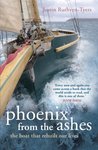 Phoenix from the Ashes: The Boat that Rebuilt Our Lives by Justin Tyers
My rating: 4 of 5 stars
I enjoyed this. Easy to read – the author is a good storyteller – the book flips easily between the ‘story’ and the anecdotes.
There are a variety of sailing tales, boat building anecdotes and also general observational writing about people in this book. Fun, humorous and also a reminder that life can be more than offices and salaries.
If I had the skills to both make a boat like Caol Ila and also write like this I’d be very happy.
 Floating Low to Lofoten by Martin Edge
My rating: 5 of 5 stars
Probably Edge’s best book on sailing.
The author takes us from Port Edgar on the east coast of Scotland to the Lofoten Islands on Norway’s coast, well up towards the arctic. Edge’s surprisingly delicate prose is easy to read, detailed and humorous. He goes into some detail about his route, includes some photos (that come out poorly on a kindle btw…) and provides a complete trip report (none of this speeding through the last bits like Ryhs-Jones’ ‘To the Baltic with Bob’ (although I liked this book too).
Edge’s yacht ‘Zophiel’ must have done thousands of miles in the various summers and I’m glad that her skipper has such a way of telling others of his adventures. For a keen yachtsman, this is a great read. It keeps it real – by pointing out not only the best bits of sailing (the bits you remember), but also the bits that are plainly absurd, but that are necessary to take part in this past time – paying through the nose for basic anchorages, the joys of dealing with other sea users etc but in the end you feel Edge ‘gets’ this and can articulate why we keep coming back to it.
 A Gigantic Whinge on the Celtic Fringe by Martin Edge
My rating: 5 of 5 stars
Martin Edge – if you sail and haven’t read his books, where have you been?
Edge comes across as someone who sails (and motors, and motor sails…) his way around the UK and further afield in a permanent state of good humour, and very occasionally apoplectic rage (about the smallest things). The writing is probably 40% sailing and 60% observation of people and places. This makes for a very readable format. Edge writes authoritatively about sailing and you can tell he is an experienced seaman. This is a kind of travel-book-with-a-serious-side, all based on a boat. Good for ones perspective on sailing…
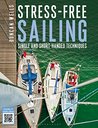 Stress-free Sailing: Single and Short-handed Techniques by Duncan Wells
My rating: 5 of 5 stars
5-full-stars. This book is a gem. Loaded with pictures, hints and tips, detailed observations and great ideas, I would recommend this to anyone who sails a yacht. Yep, literally anyone who owns anything bigger than a dinghy.
Well’s man overboard procedures are modern, well thought out and appear achievable with minimal practice (indeed they appear to be designed with a lack of practice in mind). His sections on docking and other maneuvers are again, clear, concise and well documented with photos and diagrams to clarify the points he makes in the text.
This book does exactly what is sets out to do – and that is explain the thoughts of someone who has taken the time to dissect aspects of modern yachting that cause the most angst to boat owners and crew alike and simplify them to a degree that renders them much less daunting.
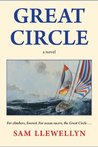 Great Circle by Sam Llewellyn
My rating: 5 of 5 stars
One of Llewellyn’s best. A ranging, sprawling book about a round the world yacht race that keeps the pace up all the way through. The number of characters is high, but short snippets for each storyline keep things interesting. A variety of different heros and villans crew the boats, each with a distinct story. Enjoyed every minute of this.
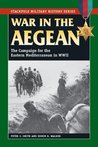 War in the Aegean: The Campaign for the Eastern Mediterranean in World War II by Peter C. Smith
My rating: 5 of 5 stars
A monster of a book. Pretty much a full history of the war on land and sea in the Aegean.
The book does go into pretty exhaustive, incredibly well researched, detail in some of the campaigns that can get somewhat involved, however the writing style is flowing and easy to read, and you arrive at a conclusion of a chapter without realising it, having got swept up in the descriptions.
If you like modern history, tails of derring-do (and some tails of disaster), beautiful descriptions of the Greek and Turkish waters and an end to end history of this area in WWII then this is for you.
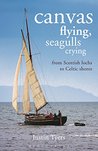 Canvas Flying, Seagulls Crying: From Scottish Lochs to Celtic Shores by Justin Tyers
My rating: 4 of 5 stars
Good, but not as good as the first one (isn’t that what they say about sequels?) – although this could be a stand alone book I think. No boatbuilding in this one (the boat is already built i guess) apart from some spar-repairing. The book includes a few minor passages about sailing, including one great description of a close shave with a towing vessel at night that still gives me sweaty palms.
The book is set across a wide time range – there is a curious section in the book where there is a description of the author and his partner living on a Scottish island for 6 years, which is passed over incredibly briefly. Its still readable, just not as good as Phoenix From The Ashes.
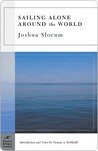 Sailing Alone Around the World by Joshua Slocum
My rating: 4 of 5 stars
A classic. Not a reason to read it in itself, but this is a good one.
Slocum’s description of building a boat from trees to vessel, filling her full of stores, sailing around the world, trading where he can, dealing with natives where he has to, and experiencing all teh emotions along the way is enchanting reading.
For a modern yachtsman used to the modern style of travel writing, the sailing sections might be lacking detail (although i think this is a testament to Slocum’s seamanship – he makes things sound easy) and the travel sections might be a bit staid. However, once you slow down to Slocum’s pace, the book opens up before you.
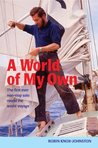 A World of My Own: The First Ever Non-stop Solo Round the World Voyage by Robin Knox-Johnston
My rating: 4 of 5 stars
Another classic sailing book. Full of action and wonderful descriptions of being alone at sea. Reading this you realise what was achieved by Knox-Johnston. He made the boat in India, it started leaking off the Azores (so he caulked a seam underwater) and continued all the way around. In today’s world of plastic boats, GPS, EPIRBS, satphones etc it is quite hard to associate with exactly what the author is telling you – however the descriptions do the journey justice and I came away with a feeling that I had a brief insight into what it took to be an ocean going yachtsman in those days.
 The Worst Journey in the Midlands: A boat journey to the heart of darkness by Sam Llewellyn
My rating: 4 of 5 stars
This book is about rowing.
Which turns out to be a good topic for a book. The author renovates a dilapidated rowing boat and proceeds to row it across a significant section of the UK to london.
It rains a lot, and he travels through some of the less lovely parts of the UK on the way, however the writing is like his novels, clean, flowing and keeps the story moving.
There is a combination of travel writing, boaty stuff (although limited to a rowing boat on a canal…) and general observations of bits of Britain you didn’t know existed or know the history of. Worth a read.
 Hand, Reef and Steer by Tom Cunliffe
My rating: 4 of 5 stars
If you own a gaff rigged vessel and need some advice this book is good news. I’m in exactly this situation and intend to keep it on board. There are chapters on the sails, rig, heavy weather, light weather etc – basically everything you might need, all with a lean to how a gaff rigged vessel will beahve in each situation.
Cunliffe obviously has a wealth of sailing experience and also some skills as a writer. The prose is easy enough to read, with the addition of pictures to make things easier to understand when descriptions get a bit involved.
Its worth reading the book from end to end. The format tempts you to dip into sections, but in my experience this doesn’t work so well as some chapters are cross referred to and terminology introduced and explained in earlier chapters and not the later ones.
I bought John Leathers Gaff Rig book as well, and that has stayed on the shelf. Get this one only if you need practical advice. Leather’s book has 60% gaff rig history. Not so practically useful as Cunliffe’s.
 Hell Bay by Sam Llewellyn
My rating: 4 of 5 stars
A sprawling epic of a novel – ranging from the high society of Ireland to the Scilly Isles, to the gold bearing hills of the Rockies and back. Llewellyn has written a monster of a book. I loved the descriptions of the Scillies, and the attitudes and fears of a generation brought up in times of great social upheaval. The story trots along, never getting stale. If you like his other stuff, this is another Llewellyn cracker.
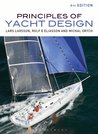 Principles of Yacht Design by Lars Larsson
My rating: 4 of 5 stars
Whew. This is boat design in some extreme detail. To be perfectly honest I was expecting something a bit lighter than this – but it is a great insight into how yacht design has gone from ‘It looks about right’ to the current Americas Cup foilers.
The book starts with the ‘basics’ – stability and hull design etc, then follows the progression through the other aspects of yacht design by having example workings on an imaginary boat. It has graphs, algebra etc, but is written in a relatively readable style that allows you to follow the progression of the imaginary yacht without having to deeply understand each section.
Recommended if you want to understand your boat in a scientific manner – not for everyone however. It is somewhat heavy going in places.
 From a Fibreglass Hull by Michael Collins
My rating: 3 of 5 stars
Somewhat out of date now, this book is a good intro to the aspects of boat building and design considerations involved in the previously popular approach of getting hull professionally manufactured and fitting it out yourself.
I bought it to find out more about the types of construction in boats prior to buying one. It is good for this kind of knowledge – pictures and diagrams along with easy to read descriptions are nicely put together. There is not enough detail to be a step by step guide, but then it wasn’t intended to be such a book – the high level overview of such a project and the critical things to research prior to detailed design are well highlighted and explained well.
Only available secondhand now, my copy cost a full 1.99GBP! A worthwhile investment I believe.
 The Riddle of the Sands by Erskine Childers
My rating: 3 of 5 stars
A classic. Not as good as I remember though. Childers takes us on a journey through the shallow waters of the German coastline at the time of the Kaiser. Some contrived plotlines and frankly implausible acts of physical strength and endurance are intertwined with some great descriptions of the low coastlines and the characters that populate them.
It’s very much a ‘Boys Own’ adventure, largely no female characters exist at all and the plot is pure duck hunting and spies.
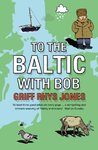 To the Baltic with Bob: An Epic Misadventure by Griff Rhys Jones
My rating: 3 of 5 stars
There is no denying it – Rhys-Jones can write. However he does seem perpetually angry. This is a great description of a North Sea/ Baltic cruise in what sounds like an alarmingly damp wooden vessel. Ryhs-Jones is clearly an experienced sailor and makes light of what must have been some challenging passages. However I couldn’t shake the feeling that he resented writing the book somewhat. I came away feeling that I was intruding on his voyage, rather than being part of it. Some of the descriptions are so negative that parts of the Baltic popularly renown for their natural splendor come out sounding like a kind of maritime Slough.
Worth a read if you are planning on visiting this region, but I’d also take the time to read Martin Edge’s book ‘Bobbing to the Baltic’ for a second opinion of some of the same places! Having not actually been to them myself, perhaps Rhys-Jones is correct and Edge is wrong, who knows. The more positive attitude prevalent in Edge’s book made for more satisfying reading.
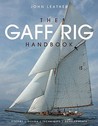 The Gaff Rig Handbook: History, Design, Techniques, Developments. by John Leather by John Leather
My rating: 3 of 5 stars
Given the title is ‘History, Design, Techniques, Developments’ – there is little of any of the last three.
A few short pages on design (unless you include the ‘History’ section about the evolution of the various rigs), almost nothing on Techniques and precious little on ‘Developments’ means that this is basically a reference on the various types of Gaff rigs and how the individual locations shaped them.
If you want a book on Gaff rig sailing technique I would recommend Cunliffe’s enigmatically titled ‘Hand, Reef and Steer’. If you want a coffee table book to solve arguments about what is better in a blow, a Bristol Channel Pilot Cutter or a Galway Hooker, then this is your guide.
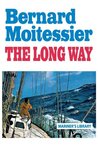 The Long Way by Bernard Moitessier
My rating: 2 of 5 stars
Oooof. This was a challenging read. Now, I like a bit of flowery metaphor laced description as much as the next guy, but this one was overkill.
Perhaps at the time it was written Moitessier was the darling of the sailing community and could be allowed his indulgences – this is a bit of a classic now. I’m not entirely sure why however. I found the lack of interesting observations about the surroundings and the actual act of sailing made the book quite challenging to continue reading. The book seems to be comprised mainly of Moitessier’s innermost thoughts, feelings and concerns. Somewhat egotistical.
There is not much about sailing compared to Knox-Johnston’s book about the same race – perhaps this is simply an indication of Moitessier’s utter comfort in the environment that nothing to do with the act of sailing as relevant to him when he wrote. Instead he writes about how the environment and the loneliness affects him. (If you go round the world twice alone, you might expect this I suppose…).
Read-worthy due to its classic status, but don’t expect a blow-by-blow account of edge of the seat sailing.
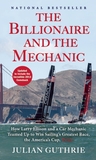 The Billionaire and the Mechanic: How Larry Ellison and a Car Mechanic Teamed up to Win Sailing’s Greatest Race, the Americas Cup, Twice by Julian Guthrie
My rating: 1 of 5 stars
I actually bought this for a present for someone – a pretty poor choice it turns out.
Boring, sycophantic drivel from someone who appears to be paid to create a story out of a catchy title.
If I took anything away from this book it was an insight into what it takes to become a billionaire. It appears a willingness to do pretty much anything to stack the cards in your favour, ignoring tradition and being disruptive, and being a perpetual self publicist are all prerequisites.
The book does not do justice to what was probably a good story if it was written by an independent author, not attached to the Oracle house.