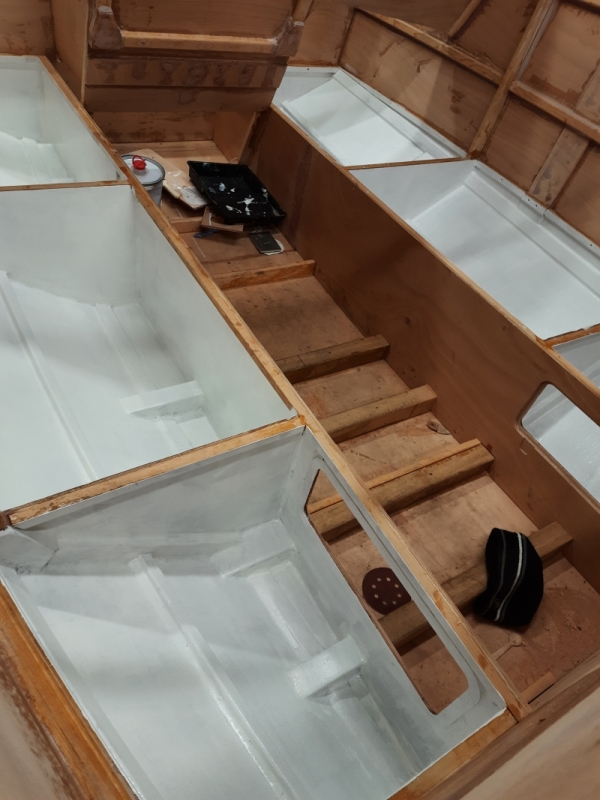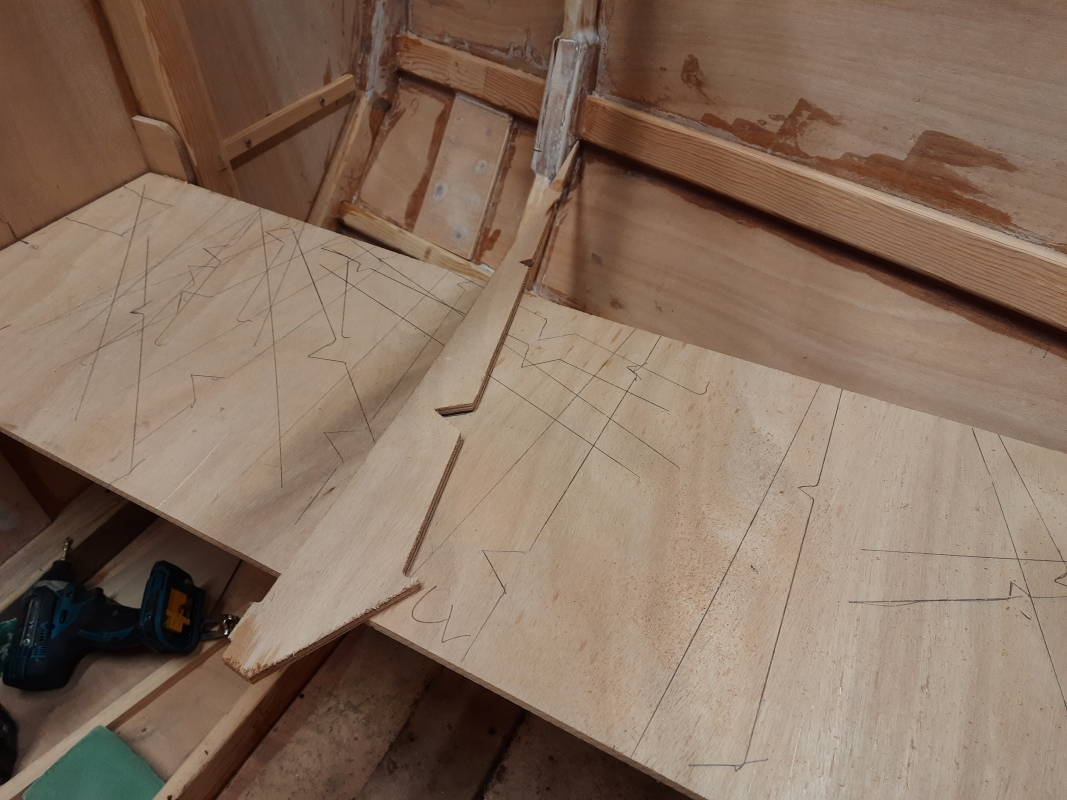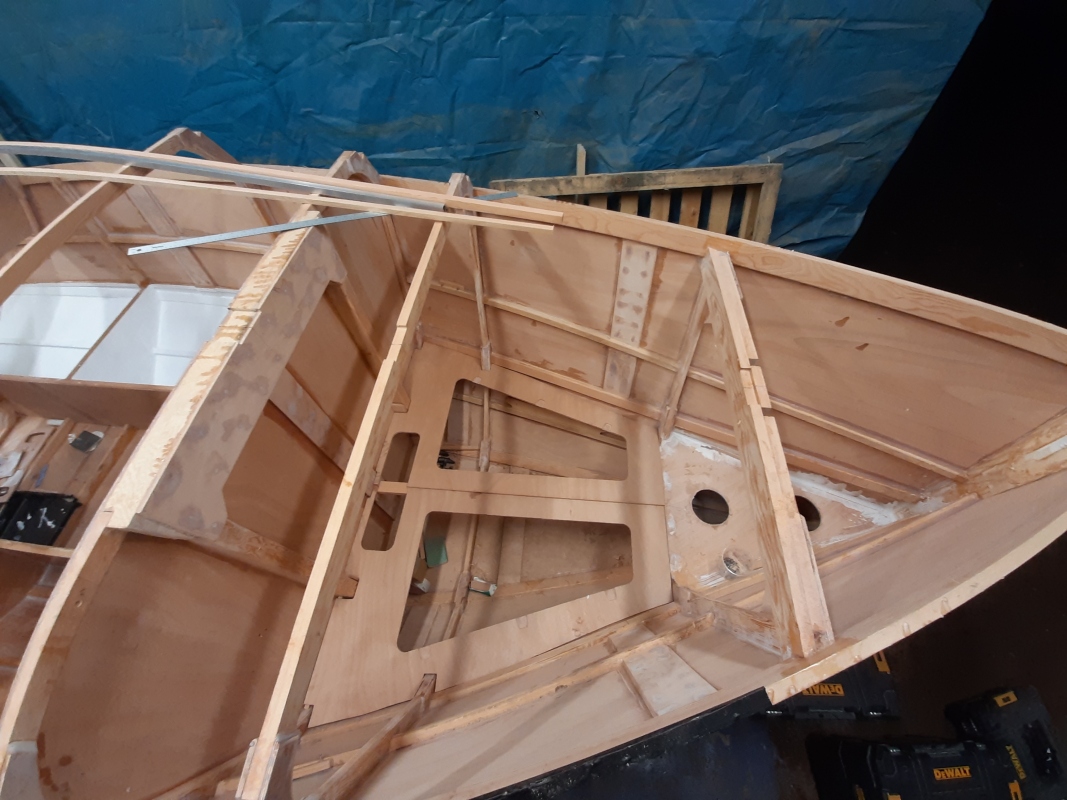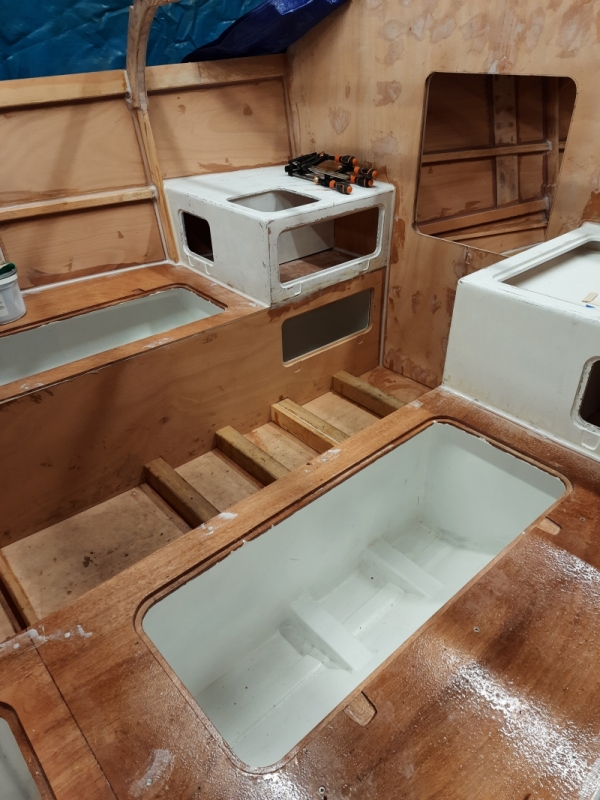

The interior is coming along nicely. Bunk tops are finally bonded into place, after filleting, epoxy coating and painting (with primer and then topcoat) to their interiors. I know adding paint to a race boat seems like an odd thing to do, but this boat will be cruised a bit too, and the additional weight in a displacement boat probably won’t make a huge difference. If I were making an out-and-out racing version I’d do a lot of things differently to try to shave off the grams!
I pre-made, epoxy coated and primered the galley and chart table pods. These are now bonded in and filleted. They just need a final few top coats of paint and the locker doors attaching. The rest of the main cabin area is filleted (apart from the keel floors) and needs a final sand before epoxy coating. The temperature in the UK has just dropped to below freezing for the first time in ages however, this may have to wait…
The final finishes like fiddles and some more storage will wait until I have the boat in the water – my target launch date is now rapidly approaching and i need to focus on items that are need-to-haves, not nice-to-haves at the moment. Getting the deck on and other hardware ready is more important than interior comfort currently! I still need to fair the thing… 🙁
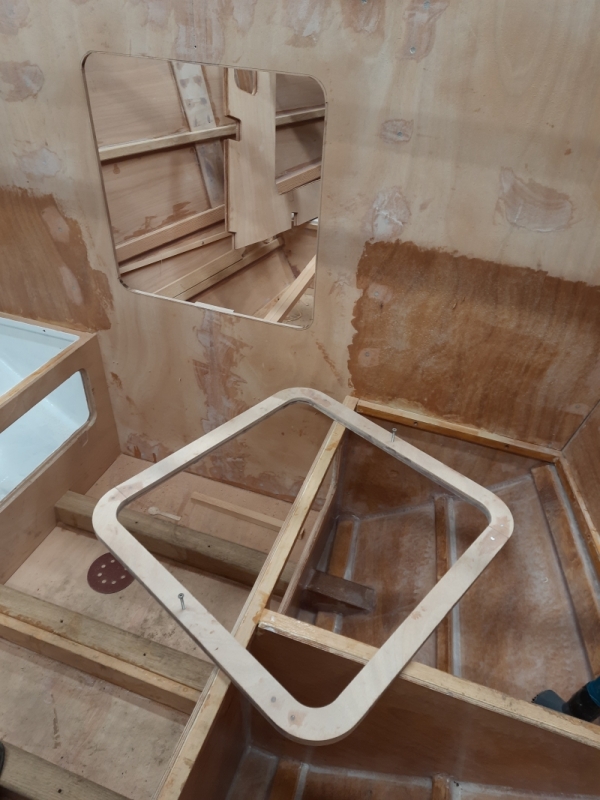
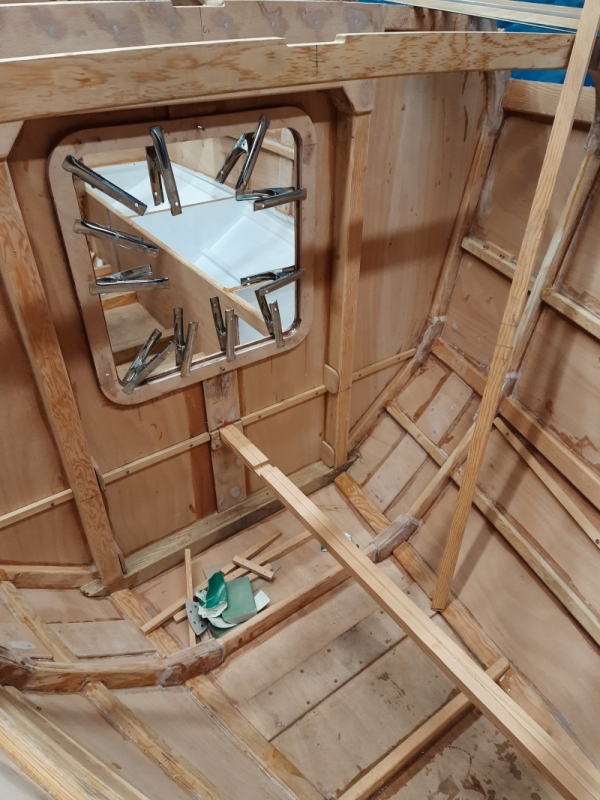
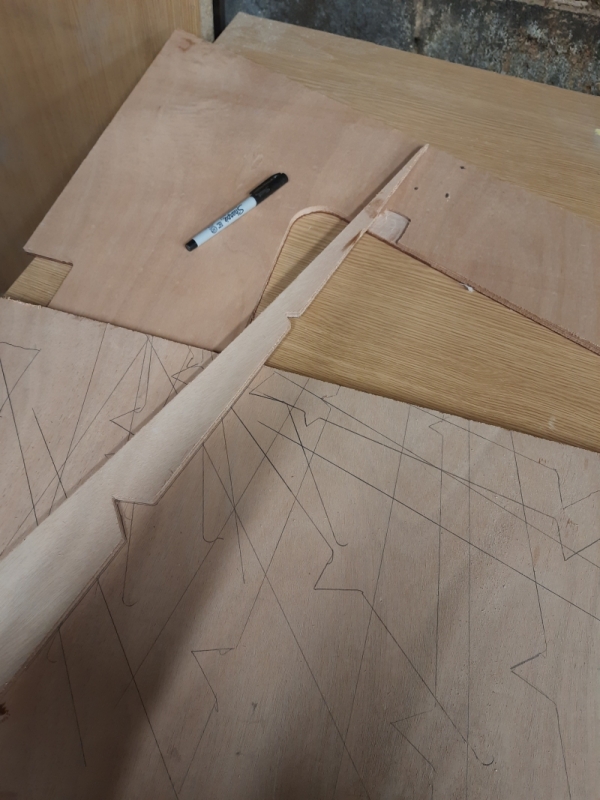
I finally got around to cutting a hole in the main bulkhead to fit the laminated hatch surround. This needs final finishing with a bearing guided router bit, but otherwise came out ok.
The bow area has come on a bit, the supports for the bunk top are in place, the bunk top is largely completed, and ready to fit. The remaining tasks are filleting, epoxy coating and painting the hard to reach areas before bonding in the bunk top. The the bow just needs the fillets sanded and then epoxy/paint etc…
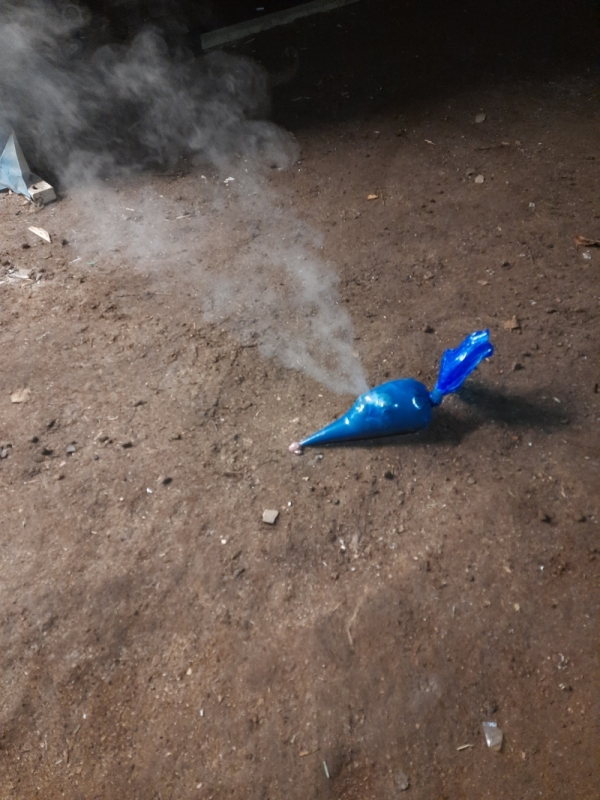
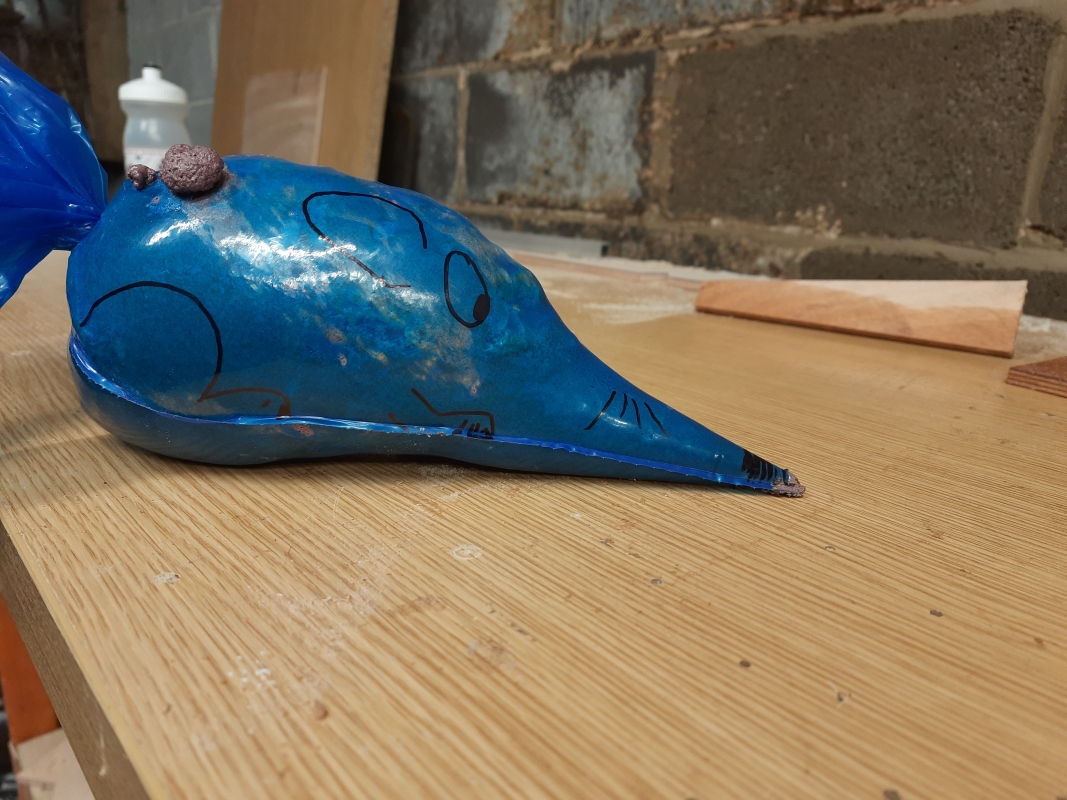
Filleting has gone better now I’ve stopped using the filleting mix from West and am just using 406 colloidal silica – the fillets should be stronger but slightly harder to sand, however the main reasons are that a. I have a huge tub of 406 I ordered by accident… and b. it seems to mix with the epoxy much easier. I previously spent about 20 mins mixing the lightweight filler and even then i still get lumps, i think maybe my pot of the filler is damp. Either way – i tried heating the resin slightly (it was still cold to the touch) to make it less viscous and easier to mix, but only succeeded in setting off a thermal runaway in a icing bag of mixture… ho hum.