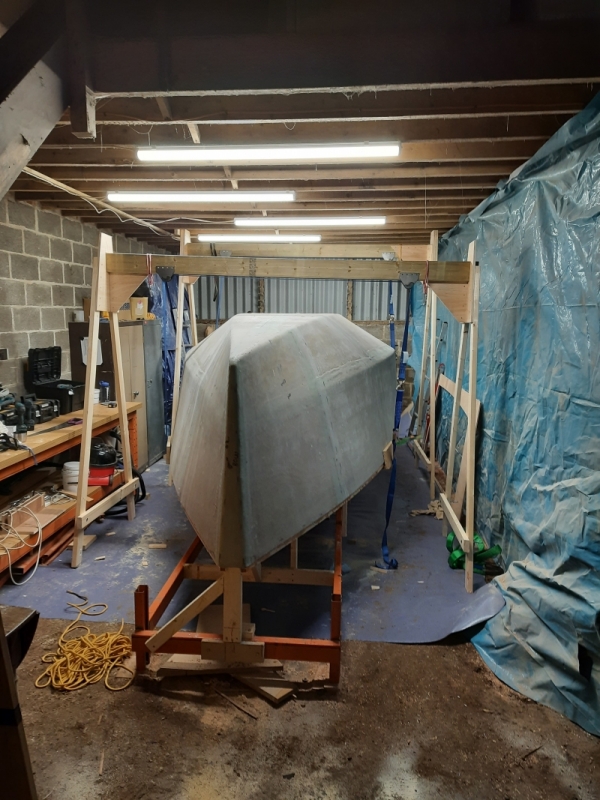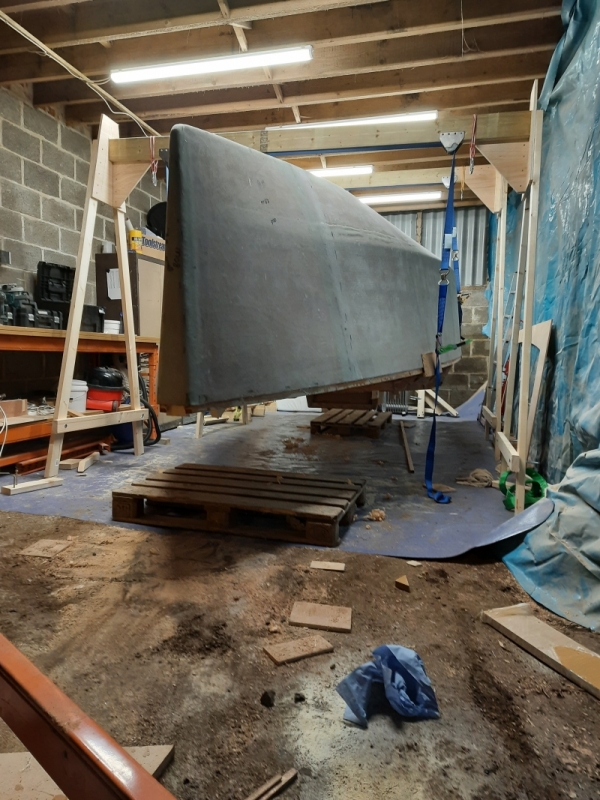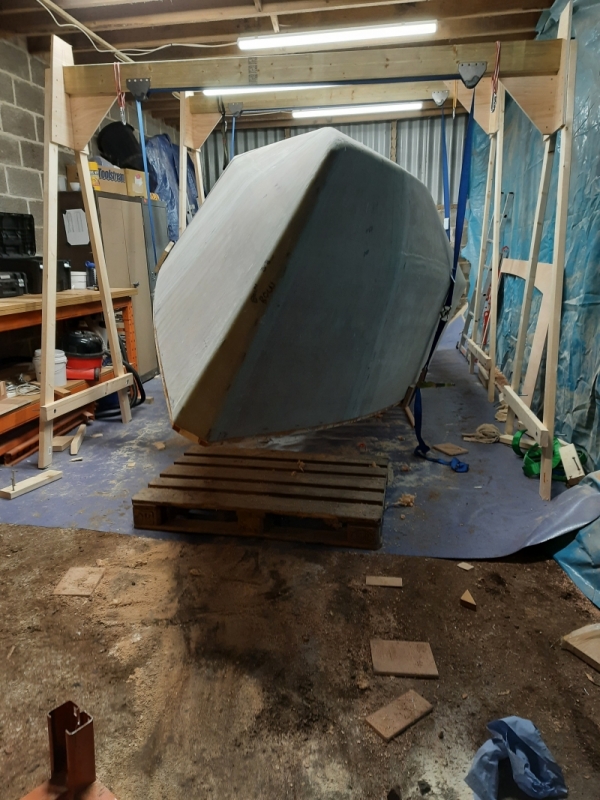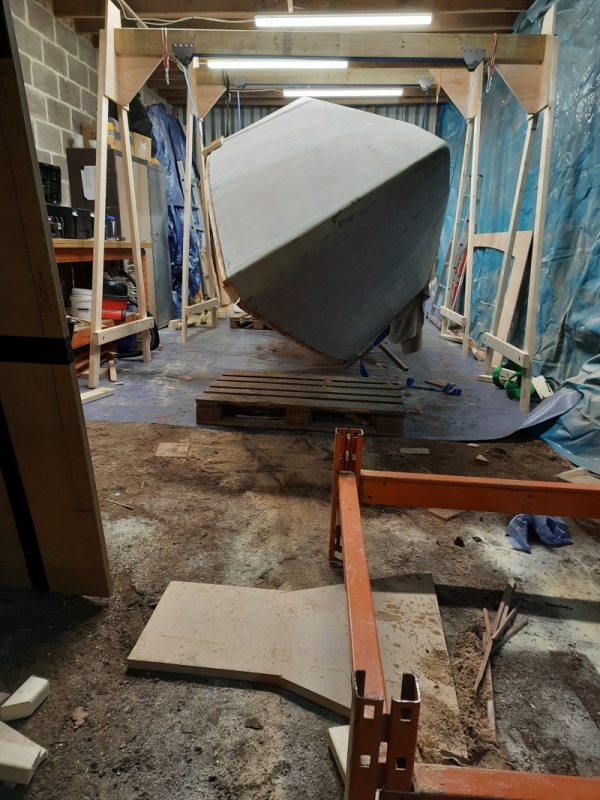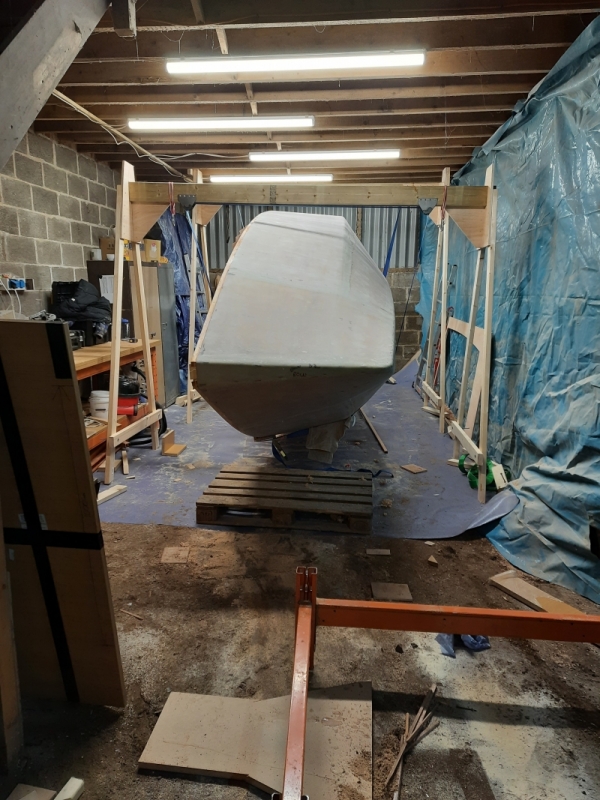

It has been a good afternoon. Given the fairing issue in the shed, next step was to turn the hull.
Turning the hull basically involves holding it in the air (some kind of strong support) and then spinning it round (some kind of freedom of movement around its axis). The only wrinkle was that i needed to be able to do it alone what with all the lockdownness at the moment.
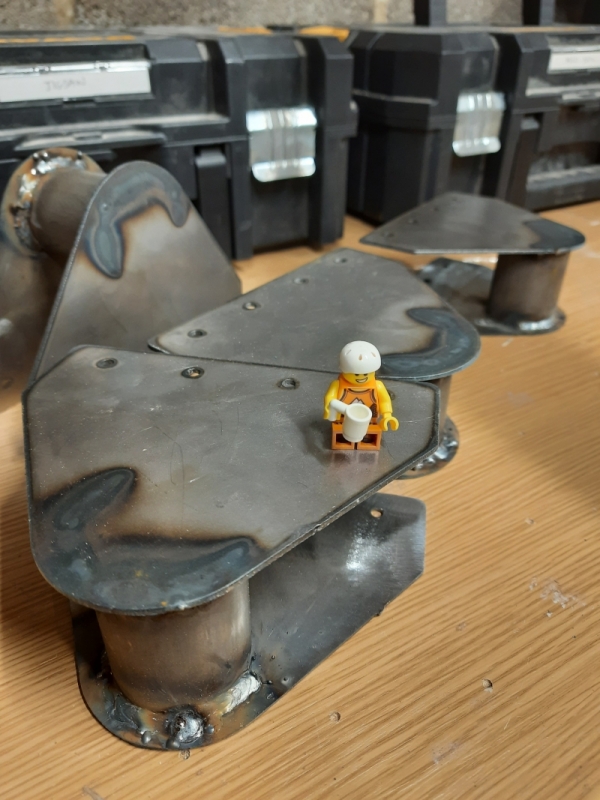
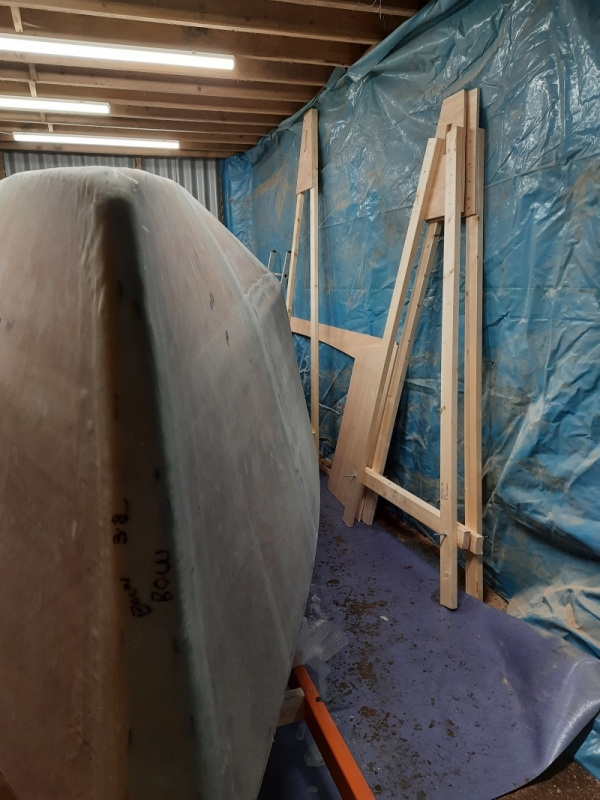
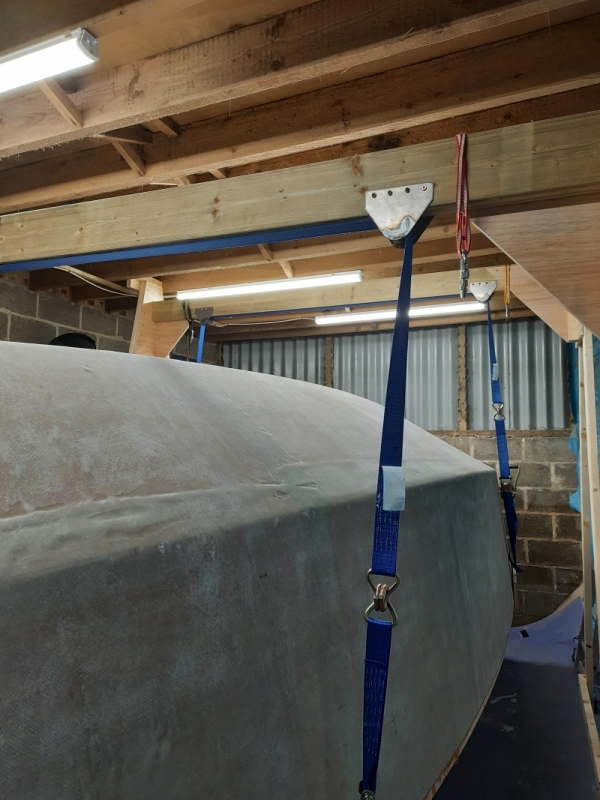
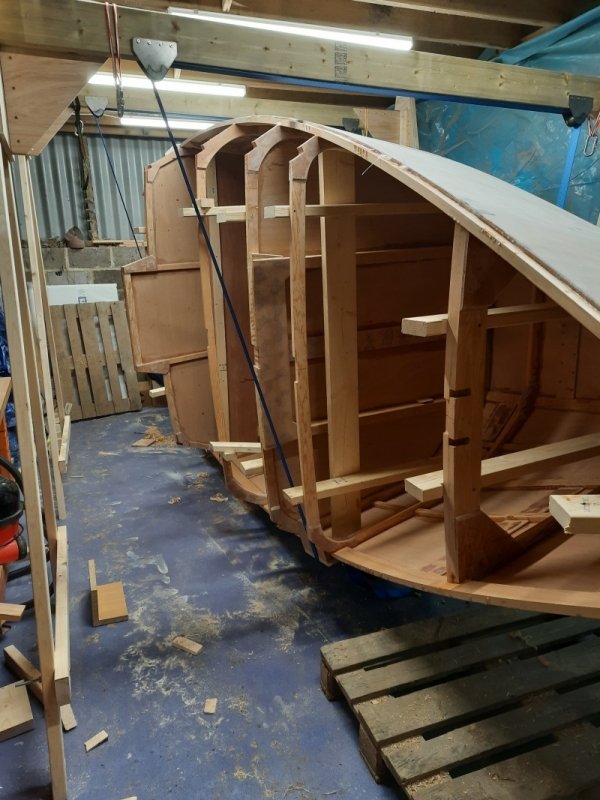
Without thinking too much (i could have disappeared down a rabbit hole pretty quickly with this challenge) I made 4 A frames to support a couple of beams (the strong support) and then made 4 rollers (or at least just large radius pipes that are slippery to a webbing strap) that could take a big ratchet strap. The strap goes around the hull and then through the rollers – giving it freedom of movement. I can’t claim any original thought here. There are a bunch of good videos of others using this technique on the t’interwebs.
The reason i didn’t just dangle it off the rafters above was that a. the shed owner is a bit tetchy and unlikly to agree to this, and b. they are of dubious integrity. Collapsing the shed over my boat would not only delay the project somewhat, but also probably void my security deposit.
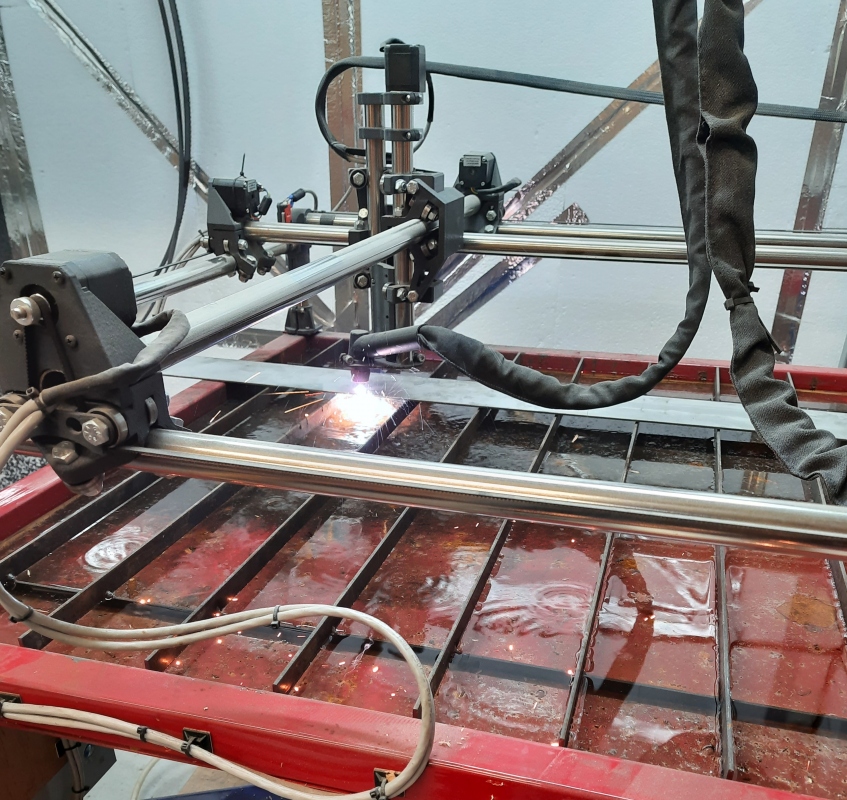
The roller design was simply a piece of tube welded between some plates that i could screw to the beam – I have a home made CNC plasma cutter (very basic, but also very cheap and occasionally effective), that makes making multiple steel profiles very quick – the rollers would have been a massive pain in the ass otherwise as there are 8 plates to make).
Once the frames were up and ratchet straps in place I cranked up the straps and to my surprise the whole hull and jig came off the floor without much effort. The hull, while looking really solid, still had me concerned, so i lowered it again and put in some extra supports across the hull at the ratchet strap locations. Once this was done I lifted it again with the straps.
I cut the jig off and dragged it out of the way. This felt a bit weird. Its been ‘part’ of the hull for so long now.
The hull, representing months of work, was now dangling off some hastily lashed up stuff that i’d put together earlier in the day. Needless to say i was a little concerned.
I had no idea if i could actually turn it at this point. Standing at the widest point, grabbing the sheer clamp and simply hauling up with both legs, to my total surprise the hull started turning, pretty easily!
I kept hauling up until it was at arms length above my head. Then using frame ‘S’ I was able to lever it to 90 degrees, then grabbing the sheer clamp, up and over, until a hand and knee under the chine brought it upright.
Given that it acts as its own counterweight, and you are only overcoming the friction of the straps it seems logical now, but at the time it seemed pretty magical.
There was minimal clearance from the floor at the 90 degree stage. This was not planned. It was lucky. I knew the boat could definitely rotate under the beams that i had put up, but the exact clearance from the floor was a fluke!
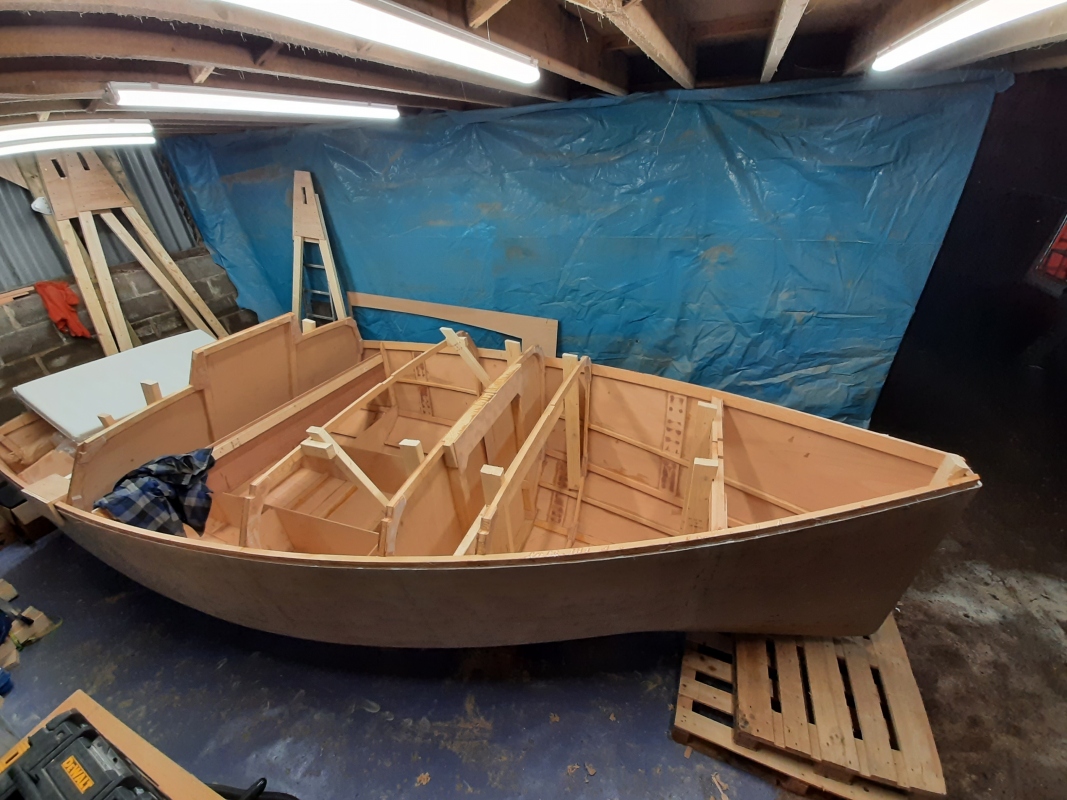
I was then able to lower the boat down to some pallets with a handy billy (block and tackle with a couple of snap links at each end that lives on any boat I’m on as a ‘do it all’ fixer when force needs to be applied).
So the boat is upright, there are lots of bits of jig left to remove, but work can progress on the interior!
Onwards.